
Compare Natural Supplements and Formats
The sheer variety of wellness products available today can be overwhelming. To make an informed choice, it is helpful to compare different natural supplements for men based on their ingredients, delivery methods, and intended benefits. This page serves as a guide to help you distinguish between popular products for men, ensuring that you select the options that best align with your specific wellness goals and lifestyle constraints.
Capsules vs. Powders
Which delivery method fits your routine?
Convenience & Precision
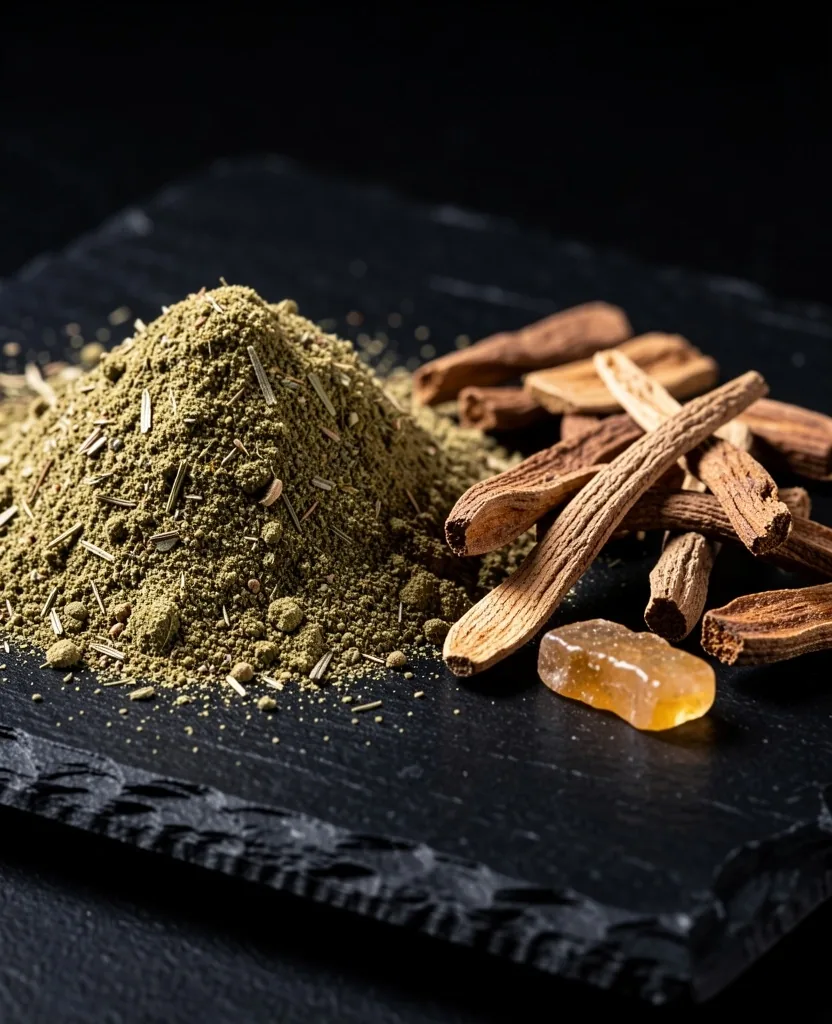
Natural capsules for strength and vitality offer convenience and precise dosing, making them ideal for busy schedules. Pre-measured amounts remove the guesswork — you know exactly how much of each nutrient you consume per serving. Capsules are also portable, tasteless, and require no preparation, which makes them a practical choice for travel or office routines.
On the downside, capsule shells limit how much active ingredient fits in a single serving. If a protocol calls for several grams of a nutrient, you may need to take multiple capsules, which can feel cumbersome.
Flexibility & Volume
Powders often allow for higher dosages of certain nutrients and can be mixed into smoothies, water, or juice. This format suits nutrients needed in gram-level amounts — such as plant protein isolates or mineral blends — where capsule equivalents would be impractical.
The trade-off is taste, solubility, and portability. Powders need measuring, some settle poorly in liquid, and flavor profiles vary. For those who value a customizable serving size and don't mind preparation, powders offer real advantages.
Summary
Choose capsules for consistent daily use and travel. Choose powders when higher nutrient volume or flexible dosing matters most.
Whole Food vs. Synthetic Vitamins
Not all men's vitamin supplements are created equal. Some are derived directly from concentrated food sources, while others are synthesized in a lab. Understanding this distinction matters because the body often recognizes and absorbs whole-food-based vitamins more efficiently than isolated synthetic forms.
Whole-food vitamins retain the natural cofactors — enzymes, minerals, and phytonutrients — that accompany the vitamin in its original food matrix. These cofactors can support how well your body puts the nutrient to work. Synthetic vitamins, while chemically identical on paper, sometimes lack these companion compounds.
How to identify whole-food options when browsing for vitamins and minerals for men:
- ◆ Look for label language like "derived from whole food" or "food-sourced" rather than generic chemical names alone.
- ◆ Check whether the ingredient list names actual foods — such as acerola cherry for vitamin C or nutritional yeast for B-complex — alongside the nutrient.
- ◆ Be aware that whole-food vitamins typically cost more due to the concentration and processing required — a reflection of raw material quality, not marketing markup.
Herbal Blends vs. Single Ingredients
Should you take a single high-dose herb or a complex blend? Single ingredients allow for targeted support, while blends are designed for synergistic effects, where different herbs work together to enhance men's health support. The right choice depends on what you are trying to accomplish.
Targeted Support
Taking one herb in isolation lets you observe its specific effect and adjust the dose precisely. This approach works well when you know exactly which nutrient you want — say, a standardized ashwagandha extract for stress response support, or a specific mineral like zinc for immune function.
It also makes it easier to identify what does or does not agree with you, since there is only one variable. For building a customized stack over time, starting single is often the cleaner path.
Synergistic Effects
Blends combine several herbs that are traditionally used together, designed so that one compound may enhance the absorption or effect of another. For general wellness goals — sustained energy, stress resilience, daily vitality — a well-formulated blend can simplify your routine into one or two servings.
The caveat: with blends, you accept the formulator's ratio. Read labels carefully to ensure the active compounds are present at meaningful levels, not just token amounts listed for marketing appeal.
Practical Note
Many people start with a blend for broad coverage, then add single ingredients as they identify specific areas they want to focus on. This layered approach lets you benefit from synergy without losing track of what each component contributes.
Evaluating Ingredient Purity
When comparing products, the "other ingredients" list is just as important as the active ones. Learning to read the fine print ensures that you are paying for actual nutrients rather than unnecessary additives or artificial colors.
Common fillers and binders to watch for
Artificial colors and dyes
These serve no nutritional purpose and are used purely for appearance. Quality healthy lifestyle products rarely need them.
Excessive binders and fillers
Some binders are necessary to hold a capsule together, but a long list of inactive ingredients can signal a lower concentration of actives.
Allergen-derived carriers
Some fillers come from soy, wheat, or dairy. If you avoid these, the "other ingredients" list is where you'll find them.
Minimal, recognizable excipients
Plant-based capsules (pullulan or HPMC) and simple carriers like rice flour or silica in small amounts are reasonable signs of a cleaner formula.
Cost vs. Value in Men's Health
A higher price tag doesn't always mean a better product, but extremely cheap supplements often use low-quality raw materials. The real question is not what you pay per bottle but what you pay per unit of active, bioavailable nutrient.
When evaluating the value of energy and endurance supplements, look at the concentration of active compounds — a measure called standardization — rather than just the number of servings. A product with 500mg of a standardized extract at 5% active compound delivers a different amount of that compound than 500mg of unstandardized powder. The first may cost more per serving but deliver more of what actually matters.
How to Compare Value
Divide the total active compound (in mg) by the price to get a cost-per-gram of what matters. Two bottles at the same price can deliver very different value once you account for standardization and actual nutrient density.
Bioavailability and Absorption Rates
The effectiveness of a supplement depends on how much of it actually enters your bloodstream. Some forms of minerals are much easier for the body to process than others. The difference can be dramatic — a cheap form may pass through largely unabsorbed, while a slightly more expensive form delivers meaningfully more of the nutrient.
Magnesium Citrate
Better AbsorptionAn organic acid form of magnesium that dissolves well in liquid and is generally well-absorbed. Often used for muscle relaxation and mineral replenishment.
Magnesium Oxide
Lower AbsorptionContains a high percentage of elemental magnesium by weight but is poorly absorbed by the body. Often used in low-cost products because it is inexpensive to produce.
Zinc Picolinate
Better Absorption
Zinc Oxide
Lower AbsorptionWidely used in inexpensive supplements but less efficiently absorbed than chelated or picolinate forms. Still functional, but you may need a higher dose to get the same benefit.
These examples illustrate a broader principle: the form of the nutrient matters as much as the nutrient itself. When comparing vitamins and minerals for men, look for chelated, citrate, or glycinate forms over oxide forms where available.
Targeted Support for Different Ages
A man in his 20s has different nutritional needs than a man in his 50s. Supplement profiles change as you age — certain natural supplements for men become more important over time, such as those supporting heart wellness or bone density. Here is how priorities typically shift across decades.
20s — 30s
Foundation & Energy
Focus on building a strong nutritional base. B-complex vitamins for energy metabolism, magnesium for muscle function, and omega-3s for general wellness. This is also a good time to establish consistent daily habits.
40s
Maintenance & Resilience
Antioxidant support becomes more relevant — vitamins C and E, along with plant-based compounds like resveratrol. Heart wellness nutrients such as CoQ10 and omega-3s gain priority. Adaptogenic herbs may support stress management during high-demand years.
50s & Beyond
Density & Longevity
Bone density support takes center stage — calcium, vitamin D3, and vitamin K2 work together. Heart-supportive nutrients remain important, and absorption challenges mean selecting the most bioavailable forms becomes even more critical.
Understanding Product Labels
Labeling laws can be confusing. Demystifying key terms allows you to look past marketing claims and understand exactly what is inside the bottle — making for a fair comparison between popular products for men.
Standardized Extract
A standardized extract guarantees a specific percentage of one or more active compounds. For example, a standardized ashwagandha extract at 5% withanolides means every serving contains a consistent, measured amount of that key compound. This consistency is what allows you to compare two products and know you are getting a meaningful dose.
Proprietary Blend
A proprietary blend lists multiple ingredients under one total weight without disclosing the individual amount of each. While this can protect a formulator's recipe, it also means you cannot verify whether the key active ingredients are present at effective levels. Treat proprietary blends with healthy skepticism — if a company uses meaningful doses of each ingredient, they usually list them separately.
Daily Value
Daily Value (DV) is a reference number indicating how much of a nutrient a serving provides relative to a general daily intake recommendation. A product showing 100% DV of vitamin C delivers a full day's reference amount. However, DVs are broad averages — your individual needs may differ based on age, activity level, and wellness goals. Use DV as a starting point for comparison, not an absolute target.
Your Comparison Summary
Use this summary as a quick reference when evaluating natural capsules for strength and vitality, powders, blends, or single-ingredient products. Each point reflects the core trade-off discussed on this page.
Ready to explore specific products?
Browse our popular products for men or read the full ingredient guide.
Herbal Pria
A Jakarta-based resource for natural supplements and vitamin protocols tailored to men's wellness and vitality.
Jl. Gajah Mada No. 188, Petojo Utara, Gambir, Jakarta Pusat, 10130
Mon–Fri: 09:00–18:00
Herbal Pria provides educational content about natural supplements and wellness products. This page is informational and does not replace guidance from a qualified professional. Products described here are intended as dietary supplements to support a healthy lifestyle, not as substitutes for a varied diet. If you have questions about how a supplement fits your personal routine, contact us or speak with a qualified advisor.